
Applied Behavior Analysis (ABA) organizations often understand behavior change clinically but manage organizational change informally. Combining project management with Organizational Behavior Management (OBM) provides a practical way to define the desired outcome, organize the work, support the behaviors required for implementation, and determine whether the project produced the intended outcomes. Formal project management methodology is recommended by some ABA programs, including those from the Florida Institute of Technology. This article reviews project management at a very high level, and how OBM can be used alongside it to benefit ABA organizations.
Projects & Project Management Methodology
Projects are temporary efforts intended to create a defined change or result. Operations are recurring activities that sustain the organization. Projects are temporary, and when completed, become part of ongoing operations. A project can be anything from planning an event to switching Electronic Health Record (EHR) systems. The process involved in switching EHRs is a project, and once the new EHR is live with users functionally using it, the project is wrapping up and shifting to ongoing operations.
Other examples of projects include things like:
Other examples of projects include things like:

Formal project management methodology provides a structure answer questions such as:
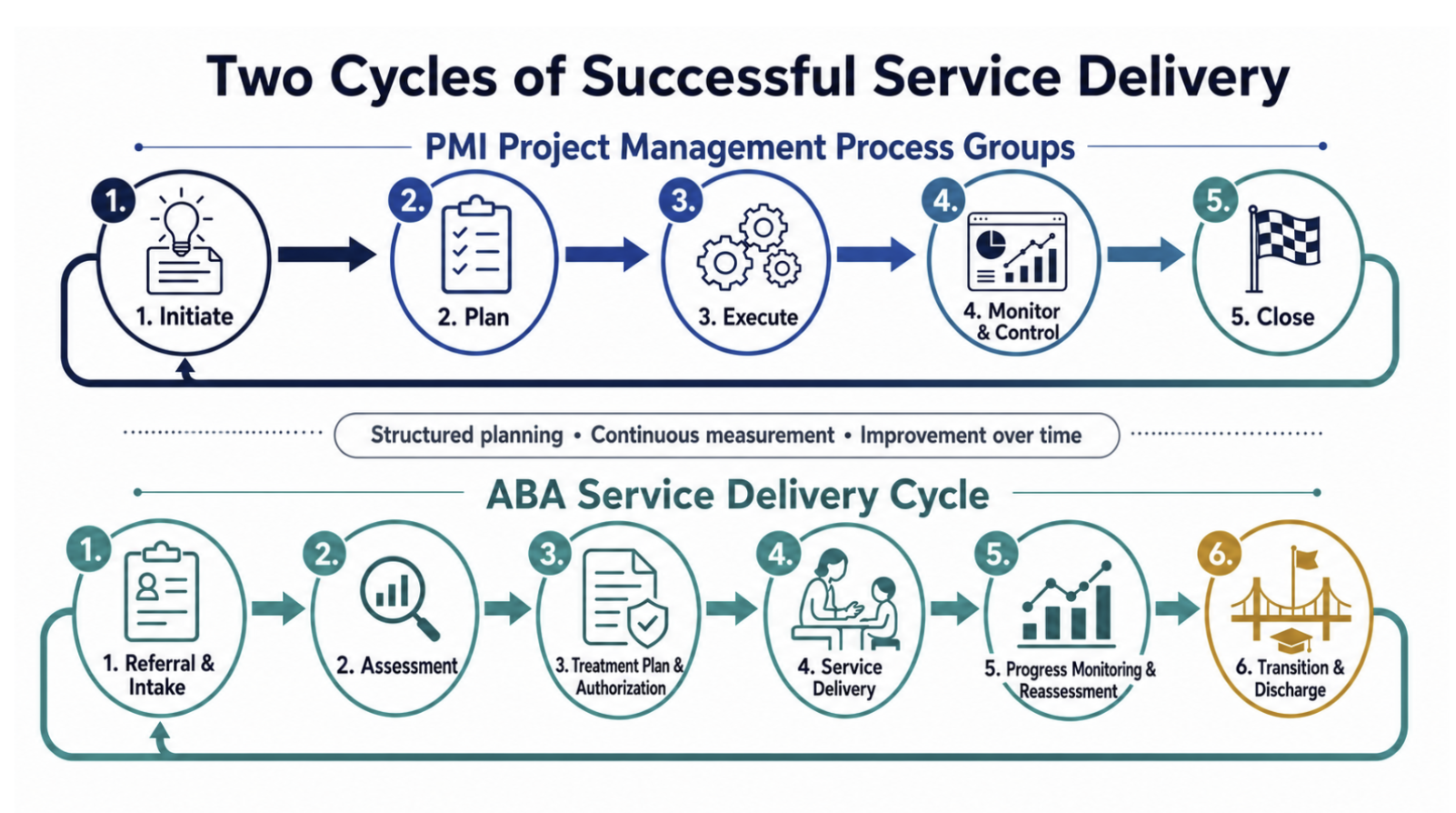
Project Management Steps
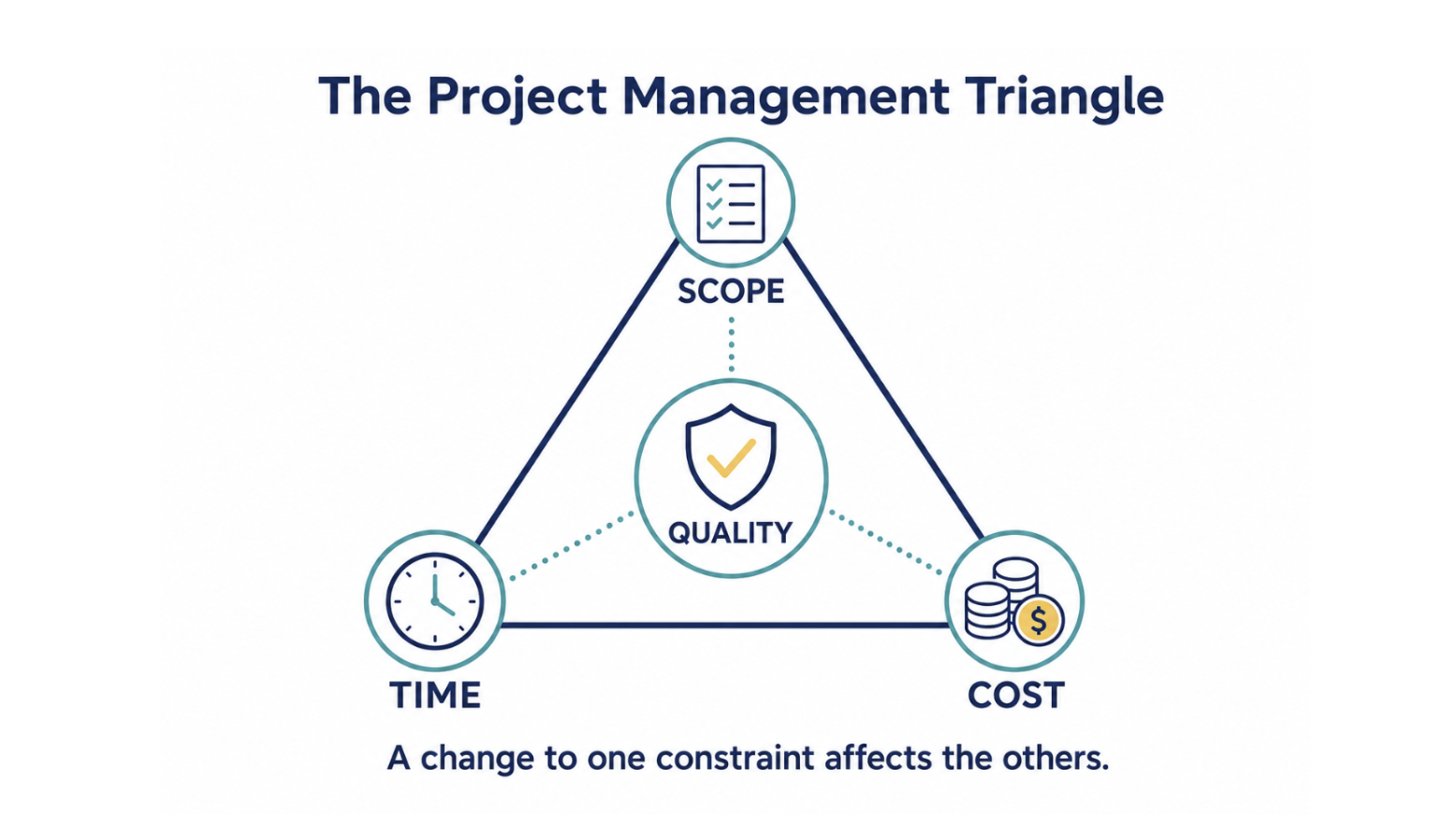
Projects balance three competing priorities: time, scope and resources (cost). Once a project sponsor decides to launch a project, they identify a project manager to manage it. Together they set the scope, and the sponsor authorizes the allocation of resources for the project manager to manage. This is the first step: Initiation.
Let’s use an example of opening a new clinic: the project sponsor (ABA practice owner, most likely) decides to open a clinic, assigns a budget to a project manager (BCBA with operations training or clinical program manager), and some internal people to work on it. The sponsor gives an idea of the timeline they expect. Quality work is central to success. No one wants an unorganized, poorly planned clinic and a project manager needs to balance budget with timeline and all the deliverables being worked on.
Next is planning. The project manager and project team identify all the work required to see the project through. They set a timeline, and finalize a project plan. Let’s say everyone agrees the new clinic should be freshly painted, with new furniture and supplies; the local township approves its use; and five insurance payers all credential it for ABA therapy within six months, with that scope as intended. Those are the deliverables, a budget is determined and the timeline set.
The execution step is the one that actually does the work. Every resource should be busy doing something. The sequence of work is important. If we know a township needs to approve the use before insurance credentialing can start, and insurance credentialing is going to take the most time, then it makes sense to work on those two things as soon as possible and save other things, like ordering supplies, until later.
The monitoring and control process is done throughout execution. We basically continuously monitor the work to ensure it’s on track with the timeline, cost and quality, and make adjustments as needed.
The final step is the project closeout. Once the success criteria are met, such as opening a new clinic with five payers credentialed, the project is almost ready to be closed. All that remains is a project post-mortem to document what went well and lessons learned for next time.
OBM in Project Management
A project can be delivered on time and still fail behaviorally if employees do not use the system as intended. A project plan can identify tasks, owners, and deadlines, but it does not automatically produce employee behavior. OBM helps determine:
In the example of opening a new clinic, one of the tasks might be to develop an Emergency Action Plan (EAP), as required by many Managed Care Organizations (MCOs) and local townships. One common item is to conduct fire drills. It’s great to have a plan that includes fire drills, but what about training staff on safely conducting drills? How do we ensure staff understand? What monitoring and feedback systems are available?
It’s easy to confuse outputs with outcomes. In OBM, the outputs of a process are permanent products indicating that something was, in fact, completed. The EAP hanging on the wall is a permanent product. An outcome is different: it’s observable behavior showing something actually being done, such as a fire drill taking place and appropriately logged. OBM helps define, measure and ensure appropriate behavior in order to truly achieve the intended outcome of a project, with quality top of mind.
ABA practice owners can reach out for support any time. We don’t do paid consulting, and are simply happy to have conversations with like-minded BCBAs trying to improve the field. OBM@acclaimtraining.com
Jamie Turner
MBA, PMP, BCBA